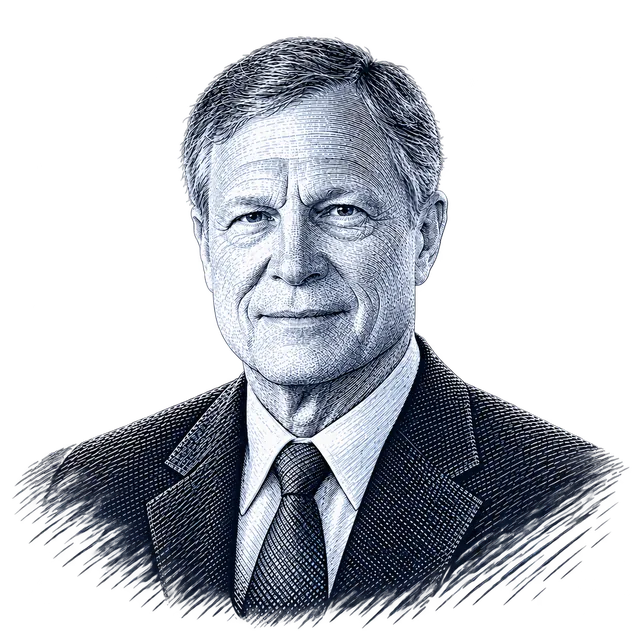
Republican · Texas's 36th District · 2026
Brian Babin
Babin worked as a musician, disc jockey, letter carrier and merchant seaman to pay for school.
Biography
Brian Babin worked as a musician, disc jockey, merchant seaman, janitor and letter carrier while putting himself through school.1 He and his wife, Roxanne, have been married since 1972 and have five children; his church work has included singing in the choir and teaching Sunday school.1
Born in Port Arthur and raised in Beaumont, he earned his science degree at Lamar University and completed dental school at the University of Texas in Houston.2 He served in the Texas Army National Guard and then the Air Force, including an assignment in Ramstein, Germany.1
In 1979, he settled in Woodville and opened a dental practice, while his public service later included the city council, mayor's office and school board.1 His work also included the Texas Historical Commission and Lower Neches Valley Authority before he entered Congress in January 2015.2
Babin chairs the House Science, Space and Technology Committee and also serves on Transportation and Infrastructure.1 He favors human spaceflight, commercial space development and support for Johnson Space Center.3 He also backs a border wall and restrictions on birthright citizenship.4 He faces Democrat Rhonda Hart for the 36th District.5
Record and controversies
2001 campaign finance settlements
In March 2001, Babin's 1996 campaign committee and treasurer settled an FEC matter requiring a $6,700 civil penalty for prohibited contributions and untimely reporting.67 That agreement states that illegal funds had been returned or disgorged and reports amended, and that the Commission made no finding the respondents acted knowingly and willfully.6
A separate November 2001 agreement with Babin, his committee and treasurer required a $20,000 civil penalty and $5,000 disgorgement over excessive contributions, coordinated advertising and reporting violations.8 The agreement also records Babin's dispute of the donor's account and his testimony that he had not discussed potential issue advertisements with the outside organizations.8 These were civil settlements, with the FEC closing the matters as to the settling respondents in 2001.78