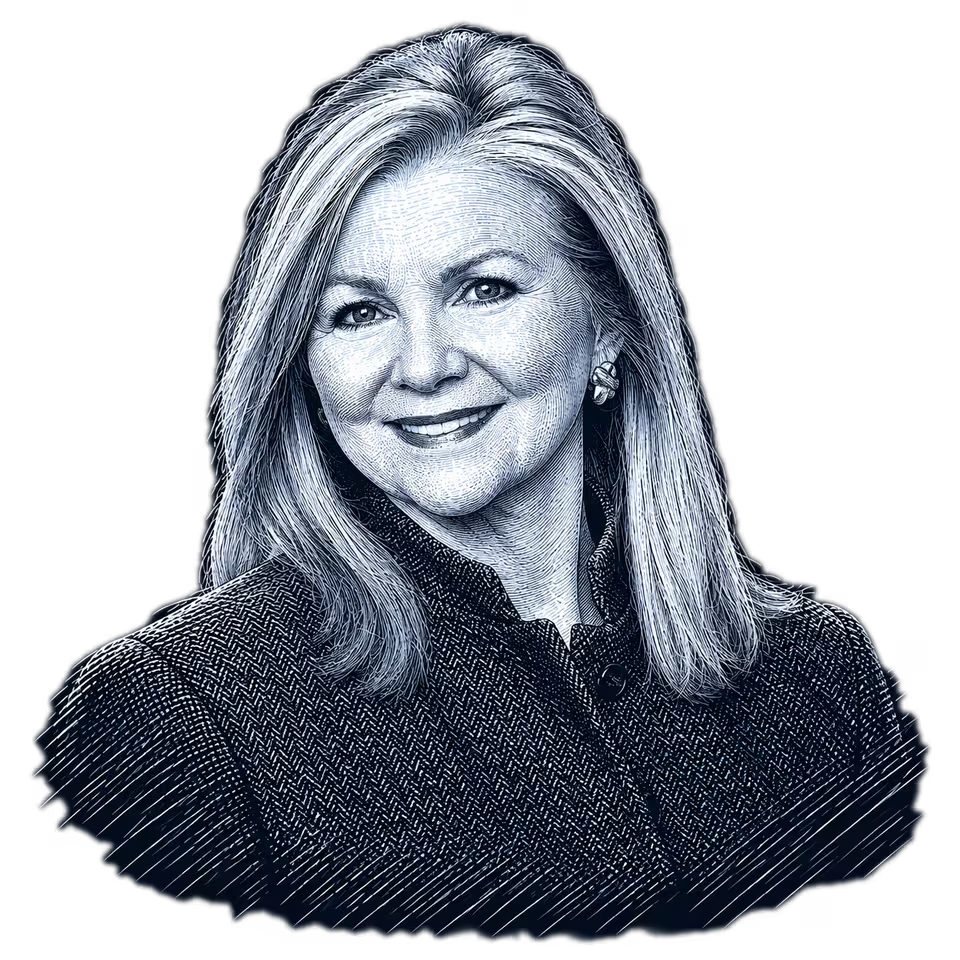
Republican · Tennessee governor · 2026
Marsha Blackburn
Blackburn ran a marketing business before entering the Tennessee Senate, then Congress.
Biography
Marsha Blackburn's four grandchildren call her Marshie, and her campaign biography describes a family tradition of Sunday lunches after church.1 She and her husband, Chuck, also have two children.1 She grew up in Laurel, Mississippi, and began working in a dress shop at 16.1
Blackburn attended Mississippi State University on a 4-H scholarship and sold educational books door to door.1 Her public service began in 1995 as executive director of Tennessee's Film, Entertainment and Music Commission.2 She went on to the Tennessee Senate, where she opposed a proposed state income tax, and then to the U.S. House.2
In 2018, Blackburn became the first woman elected to represent Tennessee in the U.S. Senate.2 She helped introduce the Speak Out Act, signed into law in 2022, which restricts enforcement of secrecy clauses agreed to before sexual assault or harassment disputes arise.23 She has also worked with Democrat Richard Blumenthal on the Kids Online Safety Act; a version advanced through the Senate Commerce Committee in August 2026.4
Her governor's platform emphasizes lower taxes, vocational training, parental authority in education and support for President Donald Trump's deportation agenda.51 She faces Democrat Jerri Green for the governorship Bill Lee must leave because of term limits.6 A victory would also open Blackburn's Senate seat, making the selection of her successor another consequence of the governor's race.7
Record and controversies
Senate ethics inquiry reported
NewsChannel 5 reported in July 2026 that a confidential Senate ethics inquiry had examined whether Blackburn's office used taxpayer resources for campaign activity.8 Her office confirmed that a review had occurred and said it was completed and resolved with full cooperation.8 The station reported that the underlying correspondence and precise resolution were not public, so the report is neither a publicly established ethics violation nor a public exoneration.8