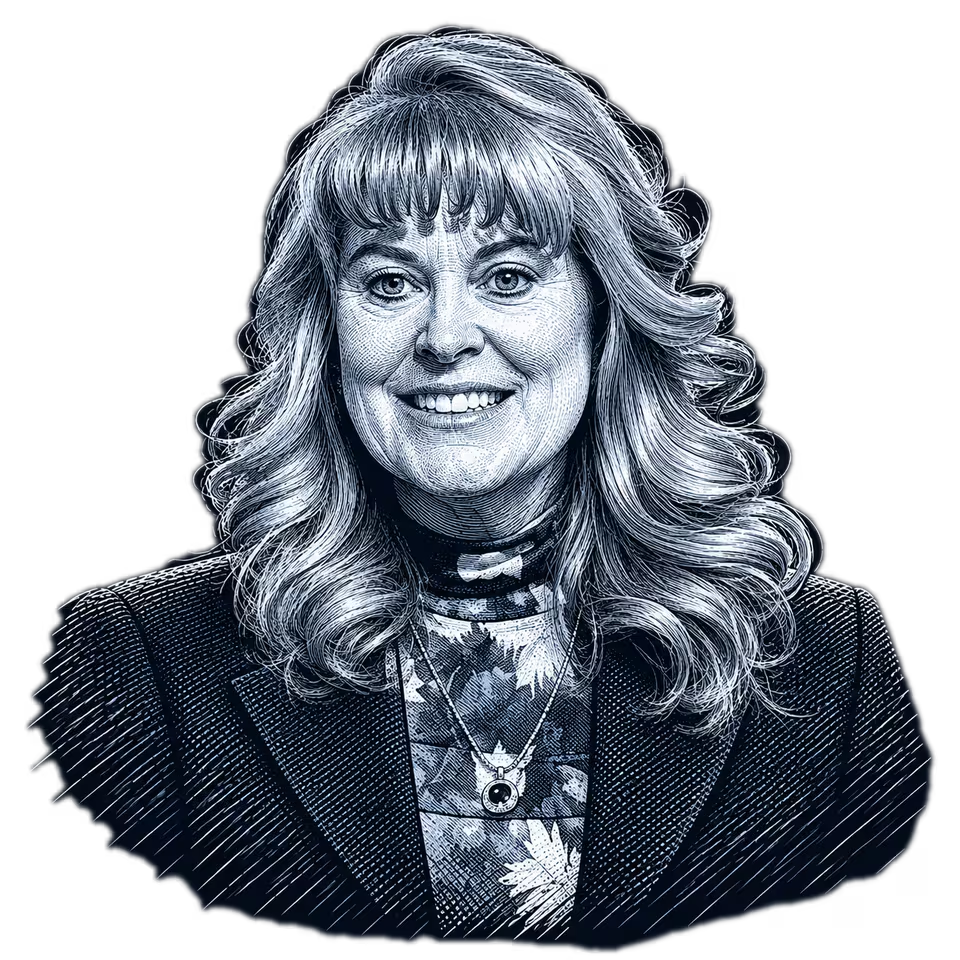
Republican · Pennsylvania governor · 2026
Stacy Garrity
Garrity built two careers before becoming Pennsylvania’s treasurer: Army Reserve officer and manufacturing executive.
Biography
As a girl in Sayre, Stacy Garrity sang at church functions with two sisters as the Garrity Trio, traveling with their grandmother.1 Election nights had their own family ritual: her mother made pizza, and the family stayed up watching returns.1 She is married to Daniel Gizzi, a project analyst at Corning.2
Garrity studied finance and economics at Bloomsburg University and became an Army Reserve officer after graduation.1 Her three overseas deployments included service in Iraq; she received two Bronze Stars and the Legion of Merit and retired as a colonel.2 Her civilian career at Towanda manufacturer Global Tungsten & Powders took her from cost accountant to vice president.2
Elected treasurer in 2020 and reelected in 2024, Garrity administers state investment, savings and unclaimed property programs.2 Her office implemented Money Match, which automatically returns qualifying unclaimed property with one owner valued at $500 or less.2 She also reduced fees for the PA 529 college savings program and removed its minimum opening deposit.2
Challenging Democratic Governor Josh Shapiro, Garrity proposes restraining spending, reducing taxes and regulation and expanding natural gas production.3 She supports eliminating the gross receipts tax on electricity, placing energy costs and the tradeoffs involved in replacing lost state revenue among the choices facing voters.3
Record and controversies
Statements on the 2020 election
Israel Bonds event ticket
Spotlight PA reported that Garrity attended an Israel Bonds investor event after purchasing millions in bonds as treasurer, but paid for her ticket from campaign funds.5 Ethics specialists questioned the boundary between public investment decisions and political activity; the report did not identify an adjudicated ethics violation.5 Her campaign said she used campaign money because she expected political conversations and did not want taxpayers covering that portion of the event.5