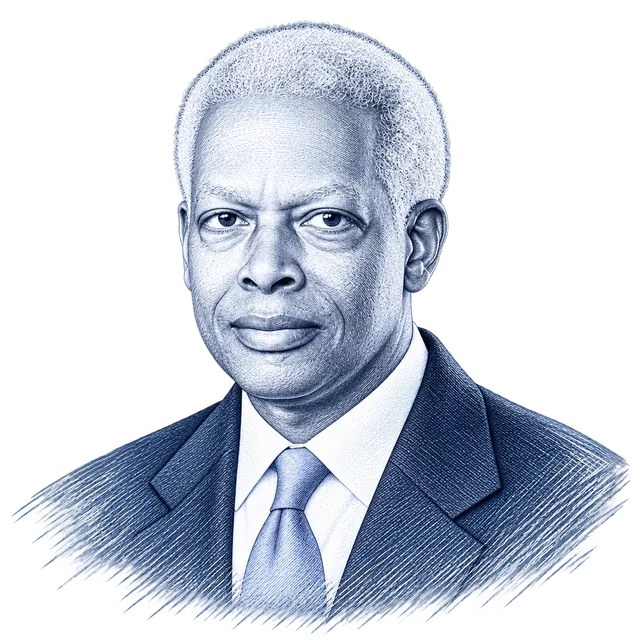
Democrat · Georgia's 4th District · 2026
Hank Johnson
Johnson spent 27 years practicing law in Decatur, including criminal defense and civil rights cases, before bringing that experience to Congress.
Biography
In 2025, Hank Johnson shared a video with his new Fender Stratocaster, explaining that he was learning guitar.1 He played a political version of “Hey Joe,” the song popularized by Jimi Hendrix.1 He and his wife, Mereda Davis Johnson, a DeKalb County commissioner, have two adult children.2
Born in Washington, D.C., Johnson earned a political science degree at Clark College and a law degree at Texas Southern University's Thurgood Marshall School of Law.2 He practiced law in Decatur for 27 years, handling criminal defense, civil rights and personal injury cases.2
Before entering Congress in 2007, he served as a magistrate judge for twelve years and a county commissioner for five.2 He is now the top Democrat on the House Judiciary subcommittee covering courts, intellectual property, artificial intelligence and the internet.2
Johnson introduced the FAIR Act of 2025, which would block agreements requiring arbitration of future employment, consumer, antitrust and civil rights disputes.3 The proposal also seeks to protect participation in class and collective actions.3 Johnson says the legislation would preserve access to jury trials for workers and consumers who signed contracts requiring them to use arbitration when disputes arise.2 He advocates Supreme Court term limits and stronger ethics rules for justices.2 His opponent is Republican Jim Duffie.4
Record and controversies
Arrest at a 2021 voting rights protest
Johnson was arrested on July 22, 2021, during a voting rights protest outside the Hart Senate Office Building for crowding, obstructing or incommoding.5 He told the committee that he paid a $50 fine and was released; the committee declined to establish an investigative subcommittee and closed its matter without further action.5 Johnson defended the protest as necessary to protect voting rights.6 At the time, the committee report expected the remaining legal proceedings to be resolved; the report was not a court judgment.5